Hiroki Mori/ Research Team for Social Participation and Healthy Aging
・Introduction
In 2025, the generation born during Japan's first baby boom--the post-War cohort with the highest birthrate --reached the age of 75. In 2040, when the older adult population is expected to peak, the aging rate in Japan will reach 35%, and the number of people with limited social connections or support in their daily lives is projected to increase by approximately 1.5-times compared to the present. Studies have shown that social isolation poses a risk to mortality comparable to, or even greater than, drinking, smoking, and lack of exercise.
In response to these demographic shifts, since 2005 the Japanese government has been promoting the development of a community-based integrated care system, which aim to provide housing, medical care, long-term care, prevention, and daily living support in a coordinated and community-driven manner. For this system to function effectively, it is essential to foster community ties and increase citizen engagement in health-promoting activities. Furthermore, mutual support and awareness of responsibility among residents are indispensable. Therefore, greater social participation is required, particularly among seniors who have had few opportunities to engage with their communities or participate in health-related activities.
・From "Kayoi-no-ba" to Diverse "Kayoi-no-ba"
Our team is currently investigating "Kayoi-no-ba" -community gathering places for residents to contribute to care prevention with the support of volunteers in Japan. Traditionally, such "Kayoi-no-ba" were part of high-risk strategic approaches led mainly by local governments and professionals, focusing on exercises and physical training. However, the 2014 revision of the Long-Term Care Insurance Act marked a shift toward a population-based approach of preventive long-term care, positioning these spaces as a component of community-based preventive long-term care for all older adults. A 2018 study conducted by our research team on "Kayoi-no-ba"1) revealed that when resident organizers and private companies collaborated with various local groups and organizations, they developed diverse activities such as community cafes, recreational events, and work-related programs. These initiatives fostered collaborations among seniors and residents across a wide age range.
Furthermore, in 2019, the Review Committee on the Promotion of General Preventive Long-term Care Projects emphasized the importance of enabling seniors to identify meaningful roles and a sense of purpose within their communities, leading ultimately to preventive long-term care. The committee also underscored the need for diverse and engaging activity spaces that allow participation based on age, gender, health status, and personal interests. Reflecting this, our team defines "Kayoi-no-ba" as "diverse, recurring (at least monthly) opportunities for community residents including older adults to actively engage with others in activities that contribute to the prevention of frailty and the promotion of well-being"2). We continue to investigate and support the development of new community programs, activity models, and their social implementation in response to various local needs.
・Toward the Promotion and Expansion of "Kayoi-no-ba"
How are these diverse community activity initiatives that address various local needs being developed? Working in collaboration with the Tokyo Metropolitan Support Center for Preventative Long-term and Frail Elderly Care, we conducted interviews with organizers of various "Kayoi-no-ba" across Japan to identify factors essential for launching, maintaining, and expanding such activities3). Our analysis suggested that the following three elements interact to facilitate the establishment of diverse "Kayoi-no-ba": residents with a strong interest in community activities, securing activity venues, and access to information on funding and relevant knowledge. Moreover, maintaining "visible, regular activities held at fixed times and places" and "actively disseminating information through social media" were linked to the growth and sustainability of participation. At the same time, we identified that ongoing activities often encounter challenges such as "aging of the organizers," "difficulty securing venues or operational funds," and "interpersonal conflicts among participants." To address these issues, it is important to make effective use of consultation and advisory services offered by municipalities, as well as to collaborate with other organizations while continuing the activities.
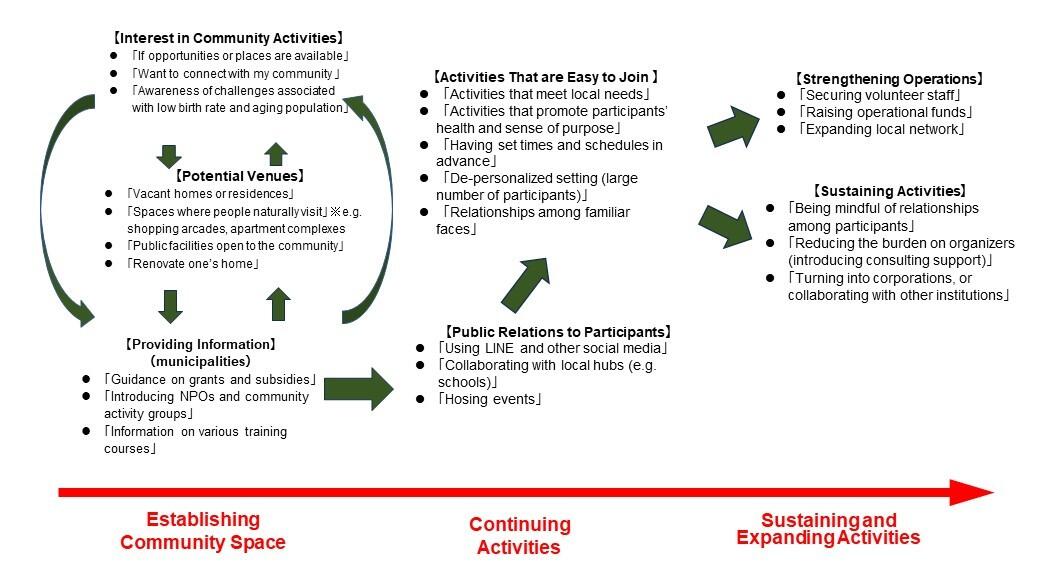
Figure 1. Factors Related to the Development of Diverse Community Spaces
Regardless of duration or scale, "Kayoi-no-ba" and activities within can serve as familiar local examples that inspire the creation of even more varied initiatives. Participation in such spaces fosters interpersonal connections and social capital, defined as the trust, norms, and networks that exist within a community, which, in turn, positively influence community-wide health. To promote the expansion of these initiatives throughout local communities and, ultimately, across society as a whole, our team has proposed a procedural model for promoting "Kayoi-no-ba" known as ACT-RECIPE4). ACT-RECIPE is an acronym for Comprehension, Research and Planning, Team Building and Collaboration, Implementation, Evaluation, and Adjustment and Improvement*a. Since fiscal year 2022, our research team has been working in collaboration with municipal staff, professionals from community comprehensive support centers, and local residents in Tokyo to promote community activity initiatives in accordance with the ACT-RECIPE framework. As part of this effort, we have examined the effects of participation in "Kayoi-no-ba" during the COVID-19 pandemic and assessed the impact of introducing our in-house "Add-on (Choi-tashi) Program*b," in these places5).
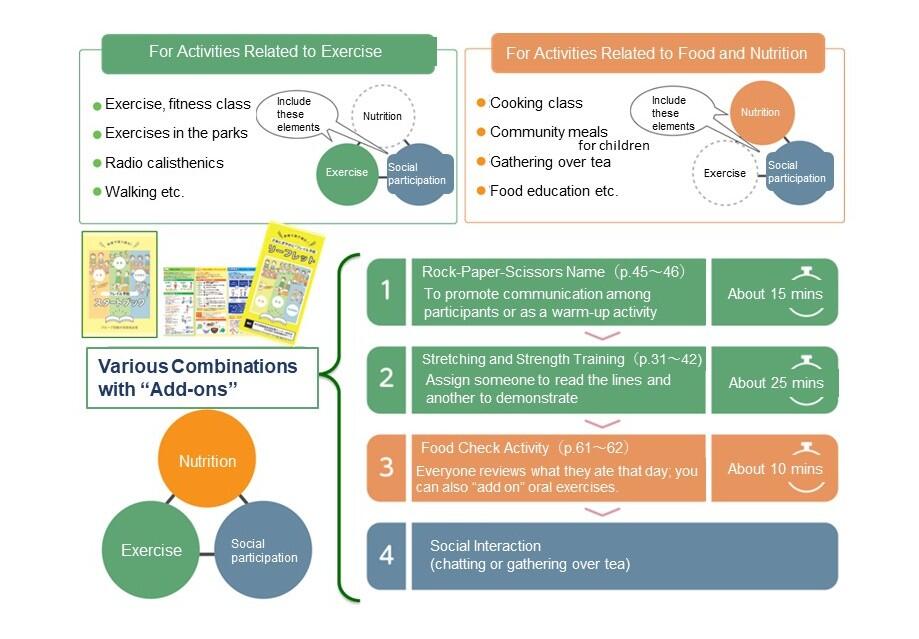
Figure 2. Example of the "Choi-tashi Program" developed in-house
(Excerpted from "Working with the Community! Frailty Prevention Startbook")
・Conclusion
The development of "Kayoi-no-ba" entails many challenges. For example, what types of opportunities, venues, or programs would make it easier for men who have traditionally had fewer connections with their communities to participate, and how can such activities be sustained and expanded? Going forward, we aim to design phased strategies to encourage older men to engage in new forms of social participation. At each stage, we will identify emerging challenges, explore effective responses, and evaluate the health benefits of participation in community activities for older men, using the ACT-RECIPE framework as a guide.
・Glossary
*a ACT-RECIPE: An acronym formed by rearranging the English initials of six stages: Comprehension, Research and Planning, Team Building and Collaboration, Implementation, Evaluation, and Adjustment and Improvement.
*b Choi-tashi Program: A program designed to enhance the effectiveness of long-term care and frailty prevention by supplementing existing community activity spaces with missing elements, such as exercise, nutrition/oral care, and social participation, in an easy-to-integrate manner.
・References
1) Tokyo Metropolitan Geriatric Hospital and Institute of Gerontology. FY Heisei 30 (2018) Health Promotion and Related Projects for the Elderly (Subsidized under the Fiscal Year Grant for Promoting Health and Welfare Services for the Elderly) Report on the Study of Establishing Unique Community Spaces in Collaboration between Public and Private Sectors Based on Local Circumstances.
https://www.tmghig.jp/research/info/cms_upload/519c009723d80d79201664bfa71c5108_1.pdf
https://www.tmghig.jp/research/info/cms_upload/3cd74733cf4654dcebbcb609db2dc2ba_1.pdf
2) Ueda T., Kuraoka M., Seino S., Kobayashi E., Hattori S., Sawaoka S., Nofuji Y., Motokawa Y., Nonaka K., Murayama H., Fujiwara Y. Proposal for the Concept, Classification, and Utilization of "Community Spaces" Contributing to Long-term Care Prevention. Japanese Journal of Public Health, 69(7): 497-504, 2022.
https://www.jsph.jp/docs/magazine/2022/07/69-7_p497.pdf
3) Tokyo Metropolitan Geriatric Hospital and Institute of Gerontology, Tokyo Metropolitan Support Center for Preventative Long-term and Frail Elderly Care. Guide to Promoting Diverse Community Spaces through Practical Examples.
https://www.tmghig.jp/research/team/cms_upload/d61e4c6f46a8537747a7f7653b22a056_3.pdf
4) Tokyo Metropolitan Geriatric Hospital and Institute of Gerontology. FY Reiwa 3-4 (2021-22) Ministry of Health, Labour and Welfare Research on Longevity Science Policy: Establishing an Evaluation Framework for the Promotion of Preventive Care Activities Based on the PDCA Cycle. Guide for Municipalities: Promoting "Kayoi-no-ba" through the PDCA Cycle. https://www.tmghig.jp/research/team/cms_upload/PDCA%E3%82%B5%E3%82%A4%E3%82%AF%E3%83%AB_%E6%89%8B%E5%BC%95%E3%81%8D.pdf
5) Tokyo Metropolitan Geriatric Hospital and Institute of Gerontology, Social Participation and Healthy Aging Research Team. Frailty Prevention Start Book.
https://www.healthy-aging.tokyo/startbook